A recent update on the Cherokee County Center’s radio broadcast on WKRK reflected ongoing cell signal coverage improvements in Cherokee County, NC. However, major connectivity gaps remain, particularly for residents attempting to access the internet via cellular networks.
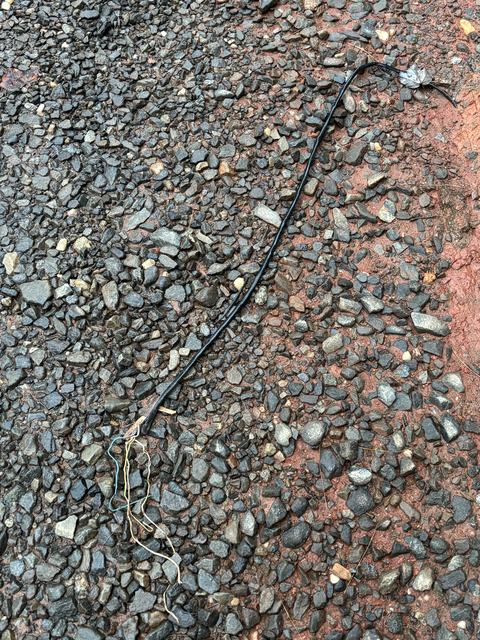
Meanwhile, legacy telecommunications infrastructure continues to deteriorate. Federal Communications Commission (FCC) rules implemented in early 2026 relaxed carrier requirements to maintain copper landlines, which serve as crucial backstops for 911 emergency access. While cellular or satellite networks absorb this technological shift nationwide, Cherokee County's topography leaves significant holes in coverage.
To protect vital communications, the Cherokee County Board of Commissioners formally intervened with carriers to address service longevity, replacement technologies, and public safety protections during legacy copper retirements.
On August 19, 2026, county leaders submitted inquiries to Verizon following federal regulatory filings involving Frontier Communications of the Carolinas LLC. The FCC authorized copper discontinuance effective November 16, 2026. Local advocacy secured key operational commitments:
No Unilateral Disconnections: Verizon will not decommission copper voice lines without a physically available, FCC approved replacement service.
Preservation of Service: Households lacking verified broadband or reliable wireless options retain existing legacy copper service until a dependable alternative is deployed.
Phased Notification: Customer outreach begins in late 2026 or early 2027, prioritizing areas with active fiber infrastructure.
Honoring Existing Contracts: Existing agreements with local government, businesses, and public safety agencies remain binding.
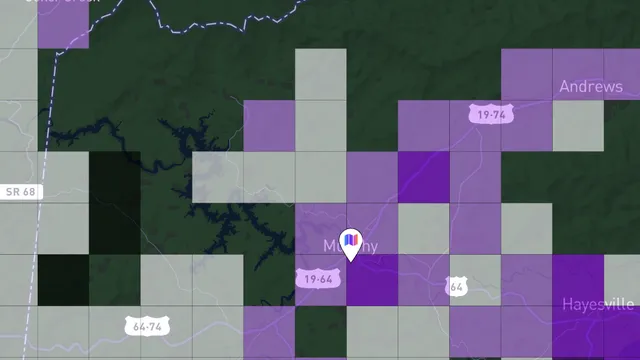
Carriers have asserted that mobile wireless networks easily absorb wired voice traffic. However, CoverageMap.com data across Murphy (28906) and Andrews (28901) highlights key wireless limitations in Western North Carolina:
Murphy (28906): Coverage clusters tightly along town limits and the US 64 and US 19/74 corridors. Surrounding mountain terrain creates signal voids in outlying hollows.
Andrews (28901): Signal strength remains restricted to the narrow valley floor along the highway. Topographical shadowing creates dead zones across mountain residential areas to the north and south.
Cellular signals follow narrow corridors rather than providing unbroken coverage, making wireless reception alone insufficient for emergency preparedness in mountainous terrain.
Traditional copper landlines drew power directly from telephone exchanges during electrical outages. Modern replacements, such as fiber, satellite, voice over IP (VoIP), or fixed wireless adapters, shift the responsibility for power resiliency to us.
Households and businesses should implement these practical communication safeguards:
Equip and Test Standby Power: Fixed wireless adapters (such as Verizon Voice Gateway or Voice Connect) use AA batteries providing 3 to4 hours of talk time and up to 24 hours standby power. For fiber modems and Wi-Fi routers, install an Uninterruptible Power Supply (UPS) backup.
Memorize and Post Your Physical 911 Address: Enhanced 911 (E911) routes exact physical addresses over landlines. Cellular triangulation can be distorted in mountain terrain, so post your numerical street address for disclosure to emergency dispatchers.
Audit Monitored Life-Safety Systems: Verify equipment compatibility with providers for medical alert units, fire alarms, or security systems before replacing physical copper lines.
Report Communication Dead Zones: Notify county emergency planners of areas lacking reliable landlines or cell coverage. Documented dead zones support county petitions for fiber infrastructure and carrier accountability. Before switching to low-cost cellular plans, confirm Wi-Fi calling support.
Protecting public safety means ensuring that corporate acquisitions do not leave rural residents without emergency access. Be on the lookout for updates on discontinuation schedules, public hearings, and broadband programs, as our service providers work through this transition.
Our community must continue to engage state and federal resources for grant-funded fiber-optic deployment to support rural commerce, banking, and healthcare.