The Extension Disaster Education Network (EDEN) is a collaborative multi-state effort by Cooperative Extension Services across the country to improve the delivery of services to citizens affected by disasters. EDEN’s mission is to reduce the impact of disasters through research-based education.
Here in Cherokee County, winter storms often occur each Winter season. EDEN has put forth some practical recommendations to be prepared for when Winter Weather occurs.
Winter Storm Preparations
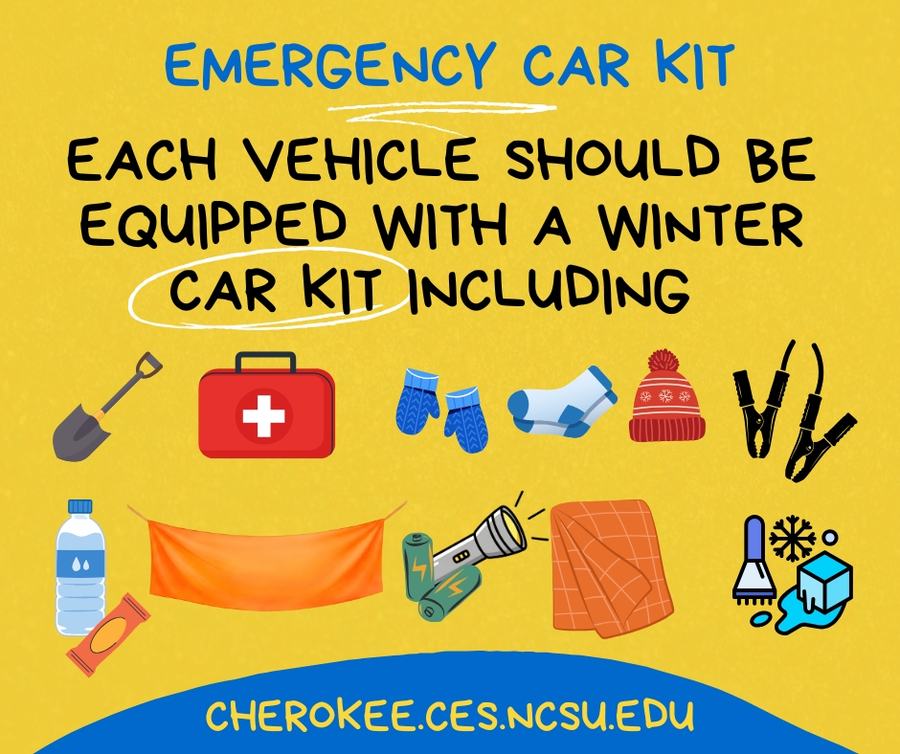
Statistically, approximately 70% of injuries during Winter Storms occur due to motor vehicle accidents, therefore it is imperative to stay in place if possible. If you do need to travel, then having an Emergency Car Kit is a great way to be prepared on the road.
Consider these items for your Emergency Car Kit:
a shovel
blankets
extra mittens
socks
hats
booster cables
flashlight and batteries
first aid kit
bright colored cloth to use as a flag
snacks
water
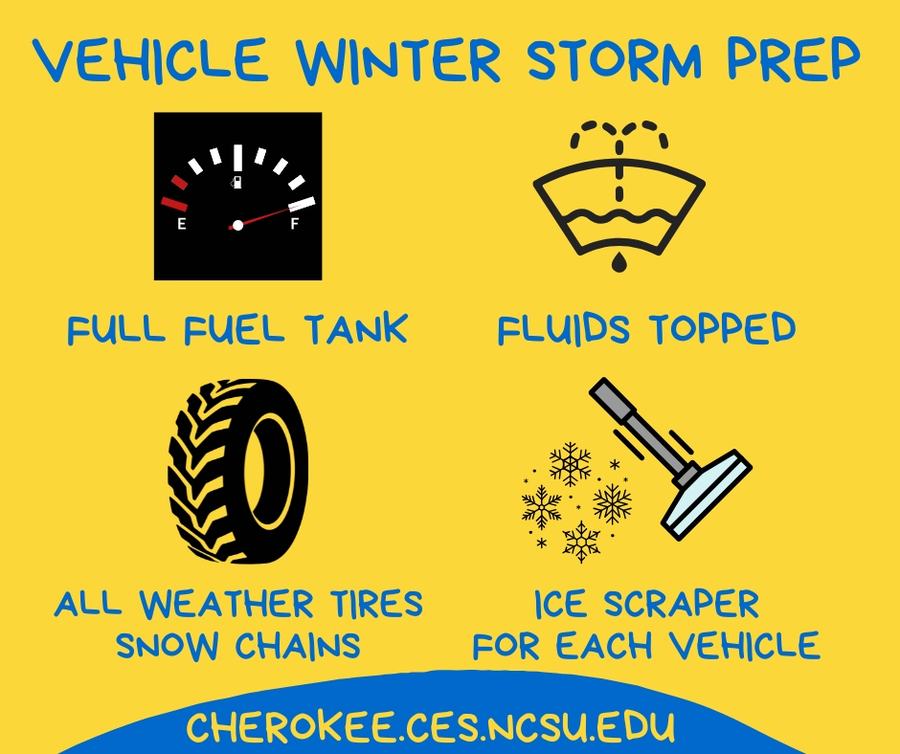
Vehicle Winter Storm Preparation
Please ensure all vehicles are fully fueled and fluids—including windshield washer solvent—are topped off. To maintain traction, all-weather tires or snow chains are required. Additionally, every vehicle must be equipped with an ice scraper to ensure full visibility through the windshield and rear glass before operation.
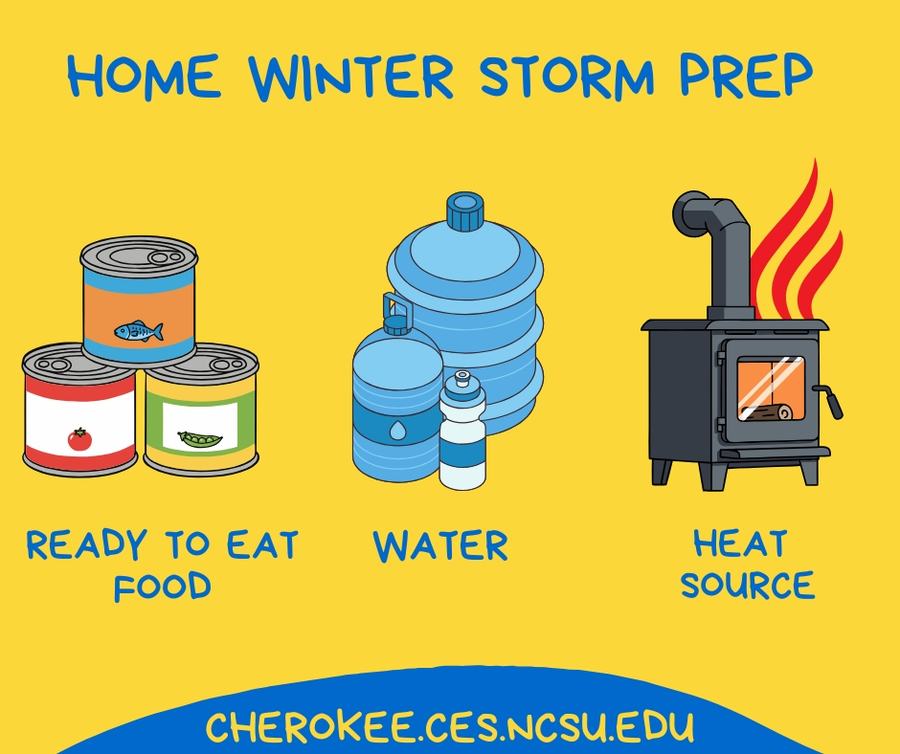
Emergency Preparedness for Power Outages
Winter storms frequently cause electrical interruptions. To ensure safety and comfort during an outage, please secure an alternative heat source or a generator. Additionally, maintain a reserve of non-perishable, ready-to-eat meals to simplify nutrition when cooking facilities are unavailable. It is also essential to store an adequate supply of water for both hydration and sanitary purposes, such as manual toilet flushing, should well pumps or municipal systems fail.
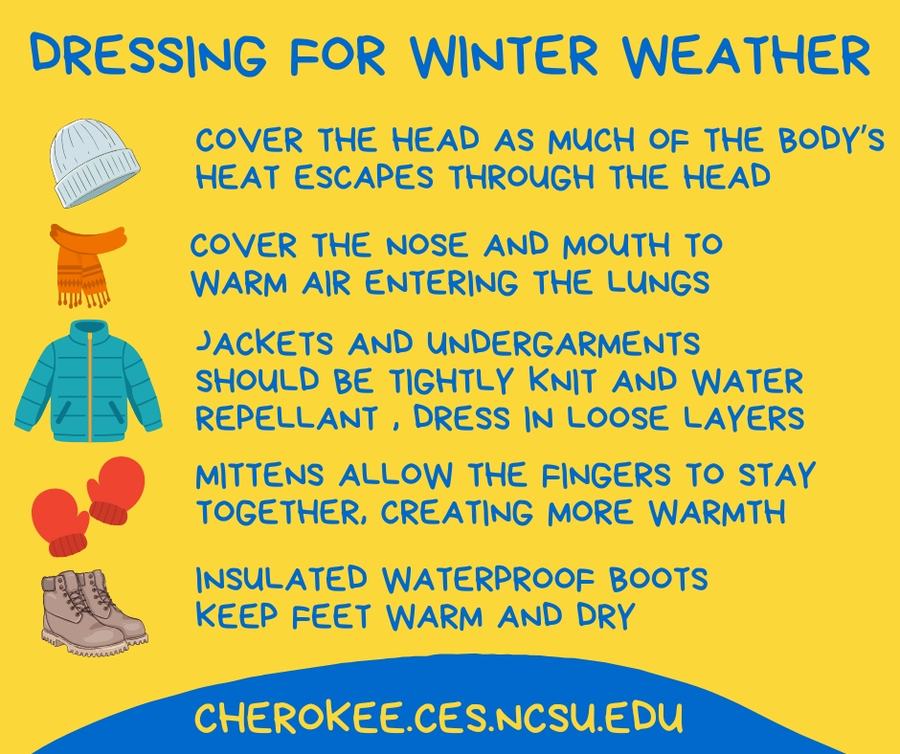
Dressing for Extreme Winter Weather
When dressing for extreme winter weather, it is essential to dress in loose layers using water-repellent, tightly knit jackets and undergarments. To maximize heat retention, keep your head covered to prevent body heat from escaping and wear mittens, which allow fingers to share warmth. Protect your respiratory health by covering your nose and mouth to warm the air entering your lungs, and ensure your feet stay warm and dry by wearing insulated, waterproof boots.